Finding roof and envelope problems with thermal imaging
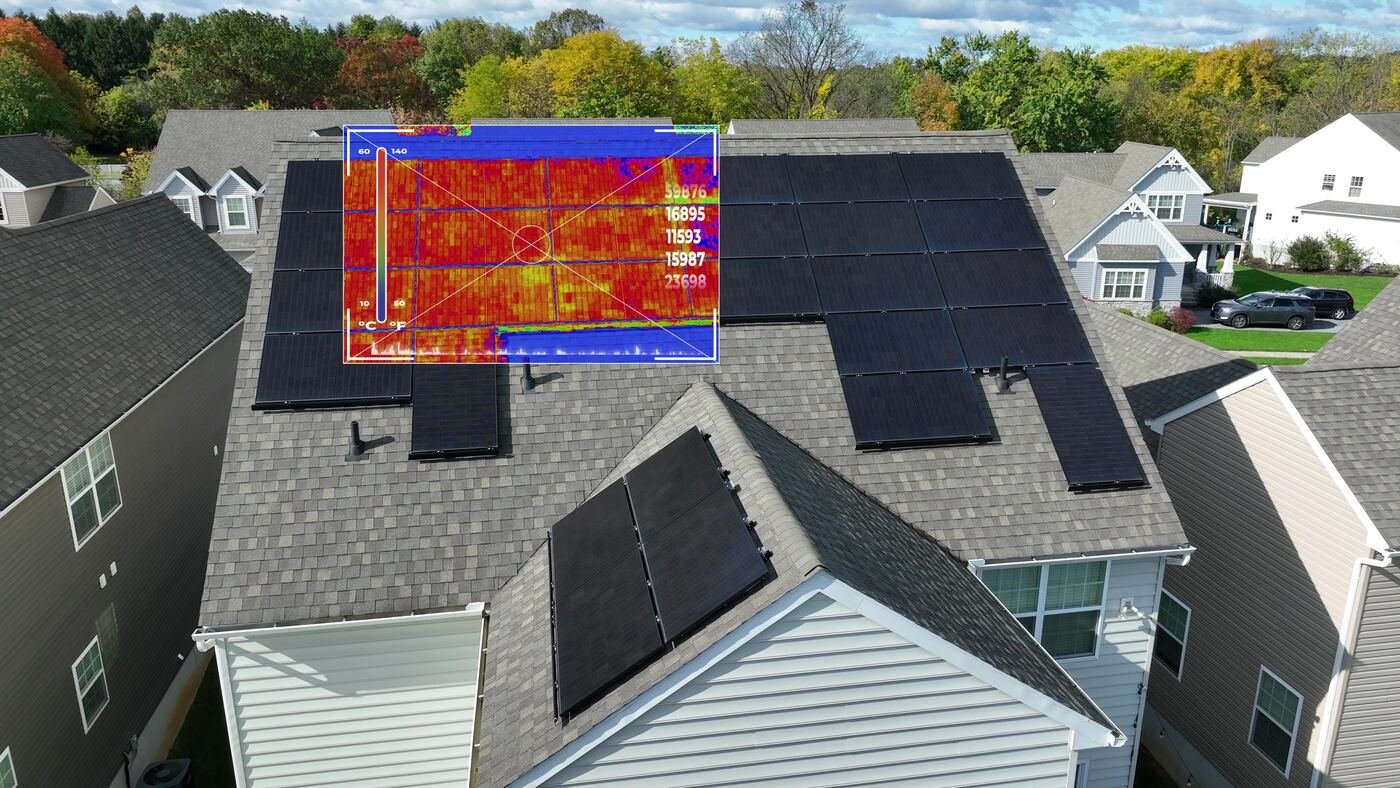
A thermal camera does not see moisture or missing insulation. It sees surface temperature. The skill is in knowing when a temperature difference means something, and in flying when the building will show it.
What a thermal flight can show
On a low-slope roof, wet insulation holds heat longer than dry insulation. After a sunny day, the wet areas stay warm into the evening and show up as distinct shapes. On walls, a thermal image can show missing insulation, air leaking at openings, and heat bridging through framing.
What it cannot show
Thermal does not see through a wall or a roof. A warm patch is a lead, not a diagnosis, and suspect areas should be confirmed with a moisture meter or a core cut before anyone prices a repair. Reflective metal roofs are difficult to read because they reflect the sky instead of showing their own temperature.
Timing is most of the job
Roof moisture surveys work best in the hours after sunset, following a clear, dry day. Wall and envelope work needs a real temperature difference between inside and outside, which usually means the heating season. Wind, rain, and standing water all weaken the result.
What you get
The deliverable is a set of thermal and matching visible images tied to a roof plan or elevation, with suspect areas marked. Flying the roof keeps people off a surface that may already be compromised.
If you are planning a reroof or chasing a leak, a thermal flight is a fast first pass that tells you where to look.